Bluerithm App on iOS
On mobile devices, Bluerithm performs best when installed (versus ran in a browser tab), especially on iOS devices (iPads, iPhones) due to performance constraints with their Safari browser.
iOS Version Requirement
For the best experience using Bluerithm on iOS devices, we recommend updating to iOS 18 or later. Earlier iOS versions (16 and 17) have known issues with that can cause unexpected page reloads, lost work, and general instability — particularly when switching between apps or returning to Bluerithm after the screen has been off. These are Apple platform bugs outside of Bluerithm's control. Updating to iOS 18 resolves most of these issues and provides a significantly more reliable experience. You can check your iOS version in Settings > General > About.
Installing Bluerithm on iOS devices
Unlike with Android and Windows devices, installing the Bluerithm app on iOS requires a manual step.
Follow these steps to add the Bluerithm app to your iPhone or iPad home screen:
-
Open the Safari browser on your iOS device.
The Bluerithm app is designed to be installed directly from the browser and does not require the App Store.
- Go to the Bluerithm app URL: Enter app.bluerithm.com in the address bar and let the page load.
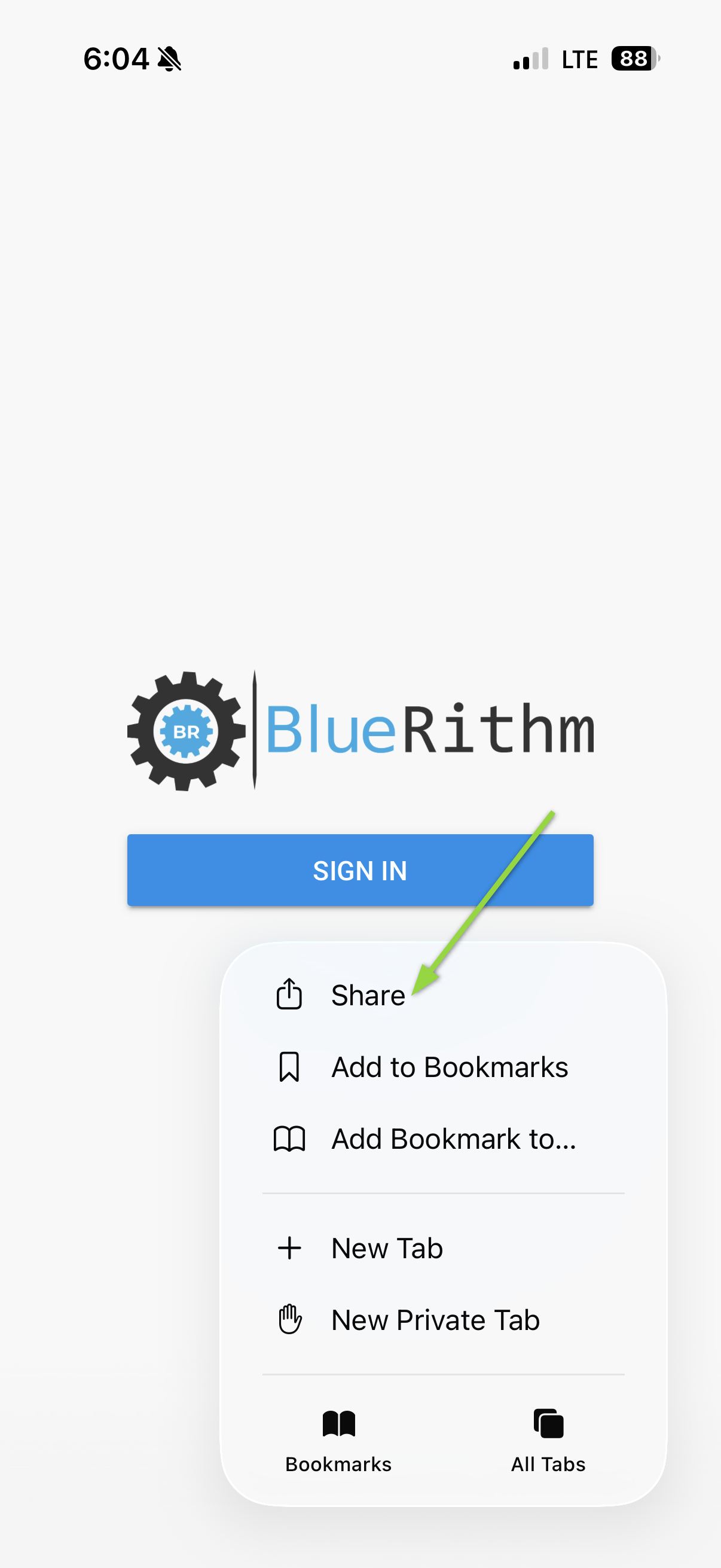
- Tap the Share button
- This icon looks like a square with an upward-pointing arrow and is located at the bottom of the screen.
- Select "Add to Home Screen" from the Share menu.
- Scroll through the options until you find "Add to Home Screen" and tap it.
- Tap "Add" in the upper-right corner. This will place the Bluerithm app icon on your home screen for easy access.
- Launch the Bluerithm app from your home screen. The app will now open in a standalone window, providing an experience that is the same as a native app, including offline capabilities.